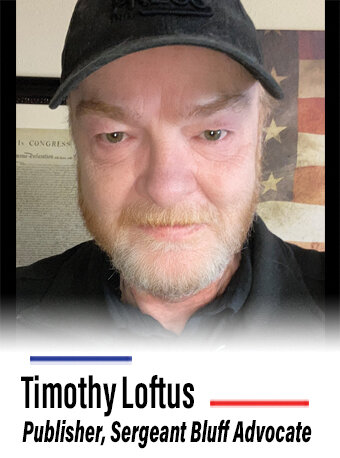
(SBA) - I’m worried. Not in the way you worry when you forget where you put your wallet or can’t remember why you walked into the kitchen. And not in the “Does this person like me?” kind of way, either—those kinds of worries fade with time, wisdom, and frankly, not giving a damn about the petty things that used to make me sweat when I was young and naive.
No, this worry runs deeper. It’s rooted in something I used to believe was rock-solid. The United States of America. Our republic. Our system. Our shared belief—however loosely held sometimes—that we’re all in this together. That belief feels fragile now. Shaky. Almost breakable.
Next year, our country will turn 250. A quarter of a millennium of American experiment. That ought to be a moment of pride, a celebration of perseverance, ingenuity, and unity. But instead, I find myself looking around and wondering if we’re going to make it to 300. Hell, sometimes I wonder if we’ll limp our way to 275.
Because here’s the problem. We’re not the same country we were even twenty years ago, and I don’t mean in the superficial, “every generation thinks things are falling apart” kind of way. I mean something more serious—more existential. People have stopped believing in the middle ground. They've traded compromise for conquest. They’ve started treating politics like religion, and the other side like heretics. It’s not about ideas anymore—it’s about enemies.
Look, I’ve voted for both parties in my lifetime. I’ve leaned right on some things, left on others. But these days, it feels like if you don’t pledge blind loyalty to one team or the other, you’re treated like a traitor. And that’s not democracy—that’s fanaticism. We were never supposed to be a country where the ultimate goal was crushing the other side. Our system depends on tension, yes—but productive tension. The kind that sparks debate, not derision. The kind that asks “What’s best for America?” not “How do we destroy them?”
But too many of the folks we send to Washington aren’t interested in governing. They’re interested in grandstanding. Tweeting. Fundraising. Point-scoring. And I don’t care if they wear red ties or blue ties—the game is the same. They speak in outrage and act in gridlock. They know that stoking fear and division gets them airtime. It gets them donations. It gets them power. And we’re the ones stuck with the bill.
Speaking of bills—let’s talk about that national debt. Over $34 trillion and counting. You know how we got there? By kicking the can down the road for decades. By pretending we can spend like drunken sailors and never pay the tab. Well, I’ve got news for you, that tab doesn’t disappear. It just gets handed to our kids.
I worry about that a lot. Not because I think the economy will collapse tomorrow—but because I know that every dollar we borrow today is a burden tomorrow. I’ve got children and grandchildren. What kind of future are we handing them if we can’t get our act together long enough to balance a budget or fix a crumbling bridge?
We used to do big things in this country. We built highways and sent men to the moon. We passed civil rights laws and created Social Security. Now we can’t even agree on fixing potholes without turning it into a partisan brawl.
That’s what I mean when I say I’m worried. Because if we can’t govern ourselves with a shred of maturity or humility, then what exactly are we doing? What’s the point of this whole “experiment in self-government” if we’re just going to scream at each other until the whole thing falls apart?
Part of the problem, I think, is that people have forgotten. Forgotten what it means to live in a republic. Forgotten what it means to be citizens—not just consumers of government services or voters every two to four years. Being a citizen used to mean more than posting your opinion on Facebook or yelling at someone in a comment thread. It meant understanding that democracy is fragile. That freedom isn’t free. That compromise isn’t weakness—it’s how we survive.
I’ve lived through a lot. I remember the Cold War. When the USSR collapsed in December 1991. I remember worrying about nuclear war as a child. And now, worrying about it as an old man. I remember when we were glued to our TVs during the Gulf War and when we stood shocked and silent watching the towers fall on 9/11.
That was a terrible day. But what followed—those brief, shining months after—was something I’ll never forget. We were united. For once, we weren’t red states or blue states. We were Americans. Strangers talked to each other in grocery store lines. Neighbors checked on neighbors. Flags flew from every porch. We remembered that we were all in this together.
Where did that go?
Now, people look at their neighbors with suspicion if they were born in another country or speak a language other than perfect English. Hell, I wish I spoke perfect English. Please deport me to the Tuscan Hills in Italy because I can’t spell Missississipppi. We have to stop assuming the worst. We need to stop spending so much time listening to pundits confirm our opinions rather than listening to people who might challenge us. We say we want unity, but only on our terms. And God forbid someone on the other side tries to reach across the aisle—they get labeled a right wing fanatic or woke liberal snowflake by their own party.
I’m a Libra, so I like balance. It’s not just an astrological thing—it’s a way of life. There’s a time for toughness and a time for tenderness. A time for tradition and a time for change. Life is never all one thing or the other. But right now, the balance is gone. Everything feels extreme. If you don’t shout, you’re ignored. If you try to reason, you’re run over.
Moderation has become a dirty word. But guess what? Moderates built this country. Compromisers wrote the Constitution. People who disagreed fiercely but came to the table anyway—they’re the ones who made America work.
Now we treat compromise like surrender. We treat decency like weakness. And we wonder why nothing gets done.
I look at my kids and I wonder what kind of country we’re leaving them. Will they ever be able to afford a home without selling a kidney? Will they have healthcare that doesn’t bankrupt them? Will their kids attend schools that teach them how to think, not what to think?
I don’t want to be the old man yelling at the clouds, but dammit, I’ve earned the right to be concerned. I’ve paid my taxes. I’ve served my community. I’ve believed in this country even when it’s let me down. But belief isn’t blind. And love doesn’t mean silence. Sometimes, the most patriotic thing you can do is call out the cracks in the foundation.
Because if we don’t fix them—if we keep playing this dangerous game of brinkmanship and bitterness—then we’re not just hurting ourselves. We’re dooming our future. We’re handing off a republic that might not survive another generation.
But before you think I’m all doom and gloom, let me say this. I haven’t given up. I can’t. Because, despite all my worries, I still believe in the American people. Not the loudest ones on TV or the angriest ones online—but the quiet, steady ones. The folks who go to work, raise their kids, care for their neighbors, and still show up to vote even when they’re disillusioned.
I believe in the teachers who show up every day to shape young minds. In the nurses who pull double shifts for strangers. In the farmers who still rise with the sun to feed the world. They’re out there—millions of them. And they’re not asking for much. Just a little honesty. A little decency. A little leadership.
Maybe that’s where it starts. Maybe we stop waiting for Washington to get its act together and start demanding it instead. Maybe we stop treating politics like sport and remember that government isn’t a game—it’s how we build roads, protect our borders, educate our kids, and prepare for the future. It’s serious business. And it deserves serious people.
I’m 62. I’ve seen a lot of change. Some good, some bad. And yeah, sometimes I just want to be left alone to sit on my deck, harass the squirrels and sip my coffee in peace. But I also know that freedom isn’t passive. It requires vigilance. Participation. And yes, sometimes worry.
So I worry. I worry because I care. Because I want better for my kids and yours. Because I still believe we can be that shining city on a hill—but only if we stop setting fire to the foundations just to win the next election.
The future isn’t written yet. We still have time. But not forever.
So let’s get serious. Let’s start choosing country over party, truth over tribe, and responsibility over rage.
And maybe—just maybe—when our country hits 300, some other 62-year-old will look around, breathe easy, and say, “I’m not worried.”
Not because the world will be perfect.
But because we finally decided to make it better.