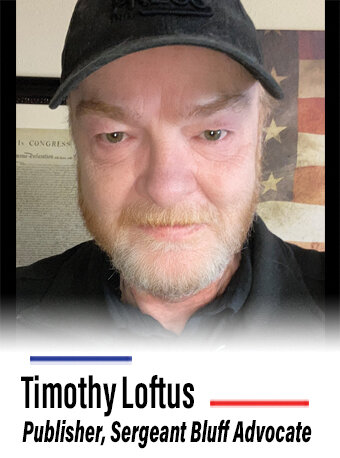
By Timothy Loftus, Editor & Publisher | Sergeant Bluff Advocate
(SBA) - Every year, as the calendar flips and the clock strikes midnight, we perform the same ritual with almost ceremonial precision. We raise a glass, exchange hopeful smiles, and declare that this year will be different. We promise to eat better, exercise more, quit bad habits, save money, be kinder, work less, or somehow become a sharper, more disciplined version of ourselves. These promises, neatly packaged as New Year’s resolutions, are presented as acts of optimism. In reality, they are often something else entirely, excuses wrapped in good intentions, a socially acceptable way to procrastinate, and a convenient method of postponing the hard work of change.
New Year’s resolutions thrive on delay. They allow us to acknowledge a problem without addressing it. By saying, “I’ll start January 1,” we buy ourselves permission to continue exactly as we are today. The extra dessert, the skipped workout, the cigarette, the late night, the unfinished project—all of it gets a free pass because change has been scheduled for a later date. The calendar becomes a shield. The future absorbs responsibility so the present doesn’t have to.
There is something deeply comforting about this arrangement. It feels productive without requiring effort. We can sit with the awareness that something in our lives needs attention while avoiding the discomfort of action. The promise itself becomes the reward. Once the resolution is spoken aloud, we experience a brief surge of relief, as if progress has already been made. But relief is not the same as improvement, and intention is not action.
The evidence is all around us. Gyms overflow in early January and thin out by February. Diet plans are started with enthusiasm and abandoned when the novelty fades. Savings goals are quietly forgotten when daily habits remain unchanged. This cycle repeats year after year, not because people lack discipline or desire, but because resolutions are built on a flawed premise. They assume that motivation magically appears at the start of a new year, as though January possesses some unique power that October or April does not.
Life does not operate on a clean calendar. Health problems do not wait until January to worsen. Stress does not pause for the holidays. Opportunities do not stand still while we prepare ourselves to be ready. Every day that passes is a day spent living with the consequences of what we choose to do—or not do—right now. By deferring action to a symbolic date, we surrender time, and time is the one resource we never get back.
More troubling is the way resolutions can become a form of self-deception. We tell ourselves that making the promise is proof that we care. But caring is not measured by words spoken once a year; it is measured by what we do when no one is watching, on ordinary days with no applause or countdown. Resolutions can soothe our conscience while leaving our behavior untouched. They allow us to feel virtuous without being accountable.
There is also a quiet cruelty in the resolution mindset. When resolutions fail, as they so often do, the blame falls inward. We label ourselves lazy, weak, or incapable, even though the system we relied on was never designed to support lasting change. The failure becomes personal rather than structural. Instead of questioning why we waited, why we delayed, or why we relied on a date rather than a decision, we internalize the disappointment and carry it into the next year, where the cycle begins again.
The truth is far simpler and far more demanding, meaningful change does not wait. It begins the moment awareness appears. When the thought hits—when you realize you’re exhausted, unhealthy, unhappy, or stuck—that is the moment to act. Not dramatically, not perfectly, but immediately. Drink water. Take a walk. Make the appointment. Turn off the phone. Start the savings account. Apologize. Write the first sentence. Do the small thing that moves you one inch closer to where you want to be.
Starting now strips away excuses. There is no countdown, no fresh slate fantasy, no illusion that tomorrow’s version of you will be more disciplined than today’s. There is only you, right here, choosing to respond to your own insight. That choice may feel insignificant, but it carries more power than any resolution ever could. Momentum is built in the present, not in the promise of the future.
Acting now also respects the uncertainty of life. We often behave as though time is guaranteed, as though we are owed a “later.” But later is not promised to anyone. Health can change overnight. Circumstances can shift without warning. People we love can be gone before we say what matters. When we postpone change, we gamble with time we may not have. Starting now is not just practical; it is an acknowledgment of reality.
This does not mean that change must be grand or overwhelming. In fact, the opposite is true. Waiting encourages all-or-nothing thinking, the perfect diet, the perfect routine, the complete transformation. Starting now encourages realism. It invites small, imperfect steps taken consistently. It replaces the fantasy of a new you with the discipline of caring for the current one.
There is also a deeper honesty in acting immediately. It forces us to confront our priorities without ceremony. If something truly matters, we will make space for it today, not assign it to a future date and hope for the best. This kind of honesty can be uncomfortable, but it is clarifying. It reveals what we are willing to work for and what we are only willing to talk about.
None of this is to say that reflection is useless or that goals are meaningless. Reflection is essential. Goals give direction. But neither requires January 1. They require attention and courage, and those are available every single day. The moment you recognize a need in your life is the moment responsibility transfers to you. Waiting does not make that responsibility lighter; it only makes it older.
New Year’s resolutions promise change without demanding immediacy. Real growth demands the opposite. It asks you to begin before you feel ready, before conditions are perfect, before the calendar gives you permission. It asks you to start now, because now is the only time you can actually do anything.
So skip the resolution. Skip the speeches and the symbolic fresh start. When the thought hits—when you know something needs to change—listen to it. Act on it. Take the first step today, however small it may be. Because the habit of starting now is far more powerful than the tradition of promising later. And later, as comforting as it sounds, may be too late.