By Timothy Loftus, Sergeant Bluff ADVOCATE Publisher
(SBA) - As spring 2025 progresses, farmers in Northwest Iowa, including those around Sergeant Bluff and Salix, are heading into the fields to commence their planting season. This year, they face a unique set of challenges, from unpredictable weather conditions to the impact of tariffs on their operations. Despite consistent precipitation, farmers have managed to make significant progress. The USDA Crop Progress & Condition report indicates that 49% of corn has been planted in the Northwest Iowa Crop Reporting District. Soybean planting is also underway, with 38% of fields planted. Agronomists note that while rain and high winds have occasionally disrupted fieldwork, soil temperatures have risen sufficiently to support planting.
However, the agricultural sector in Northwest Iowa is grappling with the repercussions of recent tariffs. A blanket 10% tariff on imports from many countries, coupled with a prohibitive 145% tariff on imports from China, has created uncertainty. These tariffs affect not only the export of crops like corn and soybeans but also the import of essential machinery and inputs. Experts warn that the lack of clarity in trade policies could lead to market volatility and financial strain for farmers.
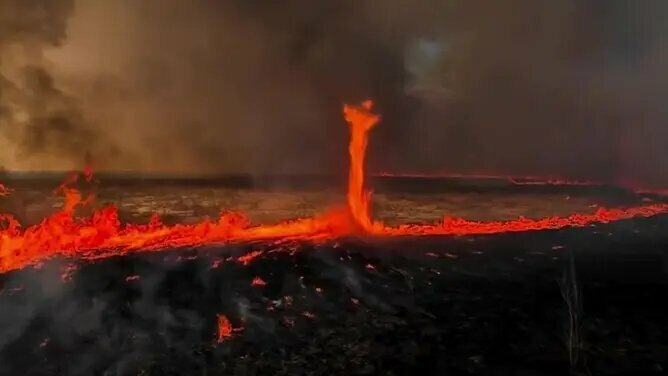
Over the past two months, Northwest Iowa has experienced a series of field fires, exacerbated by dry and windy conditions. These fires have significantly impacted farmers, delaying planting and causing damage to equipment and crops. The financial toll on farmers has been substantial, with many facing increased costs for replanting and repairs.
In addition to the recent fires, farmers in Northwest Iowa have endured severe weather events over the past two years, including hail, strong winds (Derecho), and tornadoes. These events have caused millions of dollars in damage, with crop losses and equipment damage adding to the financial strain. The cumulative effect of these disasters has made it increasingly difficult for farmers to maintain their operations and plan for the future.

Photo by Storm Lake Police Department
Despite these challenges, the consistent rainfall over the past three months has led to improved soil moisture levels, which are beneficial for crop germination and early growth. Most National Weather Service stations across the northern two-thirds of the state reported at least 125% of normal precipitation, with pockets of 200-300% of normal in north-central and western Iowa. Monthly precipitation totals ranged from 0.59 inches in Clarinda to 5.00 inches near Webster City. However, the high precipitation has also posed challenges, such as delayed fieldwork and the risk of soil erosion. Farmers must carefully manage their planting schedules and field operations to mitigate these risks and ensure a successful growing season.
The spring flood risk for Northwest Iowa is near to below normal, according to the National Weather Service. While the risk of flooding is minimal, heavy precipitation both here in Sergeant Bluff and further north at Gavens Point Dam releases due to heavier precipitation further north can still lead to localized flooding. Farmers must remain vigilant and prepared for any sudden changes in weather conditions that could impact their planting and crop management strategies. The spring pattern also indicates an uptick in severe weather threats, including tornadoes, which could further complicate fieldwork and planting activities.
In addition to weather challenges, farmers must navigate the complexities of transporting large and heavy equipment on public roads. Safety precautions are essential to prevent accidents and ensure the smooth movement of machinery. Farmers should label their equipment with slow-moving vehicle signs and check that lights and turn signals are working and visible. Avoiding travel during busy traffic hours can reduce the risk of collisions. It is also important for farmers to stay focused and well-rested, as fatigue can lead to accidents.
Regular drivers sharing the road with farm equipment must also exercise caution. Reducing speed when behind farm equipment and assessing the situation before passing is crucial. Maintaining a safe distance to avoid blind spots and sudden movements is advised. Drivers should watch for turn signals and communication from equipment operators, who often move over and signal when it is safe to pass. Passing should only be done in legal zones and when it is safe to do so.
Farm equipment operators should prioritize safety by preparing their machinery before operation. This includes inspecting tires, belts, chains, cutting parts, and safety features for any broken, missing, or loose components. Upgraded lighting and technology, such as bright LED beacon lights and observation cameras, can improve visibility and help equipment be seen by other drivers on the roads. Communication with others in the field is also important to ensure everyone is aware of the presence of machinery and people.
Farm safety is a shared responsibility between farmers and regular drivers. By adhering to safety measures, both parties can contribute to a safer planting season. As Northwest Iowa farmers navigate the complexities of weather and economic pressures, their resilience and commitment to safety will be crucial in achieving a successful planting season. The challenges posed by tariffs, unpredictable weather, and the transportation of heavy equipment require careful planning and management. With the right precautions and strategies, farmers can overcome these obstacles and ensure a productive and safe planting season.
With summer approaching fast, farmers are now dealing with the uncertainty of a shifting and extreme climate change. Heavy rain can lead to saturated soil that can delay planting and increase the risk of soil compaction. Compacted soil can hinder root growth and reduce crop yields. Farmers must employ strategies such as no-till farming and cover cropping to improve soil structure and reduce compaction. Additionally, this springs rapid snowmelt increased the risk of nutrient runoff, which can lead to water quality issues in nearby streams and rivers. Farmers are encouraged to use buffer strips and other conservation practices to minimize runoff and protect water quality.
Spring into summer weather patterns also include an increased risk of severe storms, which can cause damage to crops and equipment. In the early hours of this past April 17th, several severe storms passed through the area, causing extensive damage. In some areas, pea-to-softball-sized hail was reported along with high winds and low-level flooding. This type of weather event seems to be becoming more frequent over the past two years, with farmers losing entire crops to the events. Farmers must stay informed about weather forecasts and be prepared to take action to protect their investments. This may include securing equipment, reinforcing structures, and having contingency plans in place for crop protection.
Economic pressures from tariffs continue to weigh heavily on farmers. The increased cost of imported machinery and inputs, combined with uncertainty in export markets, has created financial strain. Farmers must carefully manage their budgets and seek out alternative sources for equipment and supplies. Government programs and subsidies may provide some relief, but long-term solutions will require changes in trade policies and market conditions.
Despite these challenges, Northwest Iowa farmers remain resilient and committed to their work. Their ability to adapt to changing conditions and implement innovative practices will be key to their success. As they head into the fields for the spring planting season, their dedication to safety, sustainability, and productivity will ensure a prosperous year ahead.